The evolution of the exhaust system and Tubi Style’s proposal for this icon of style and performance.
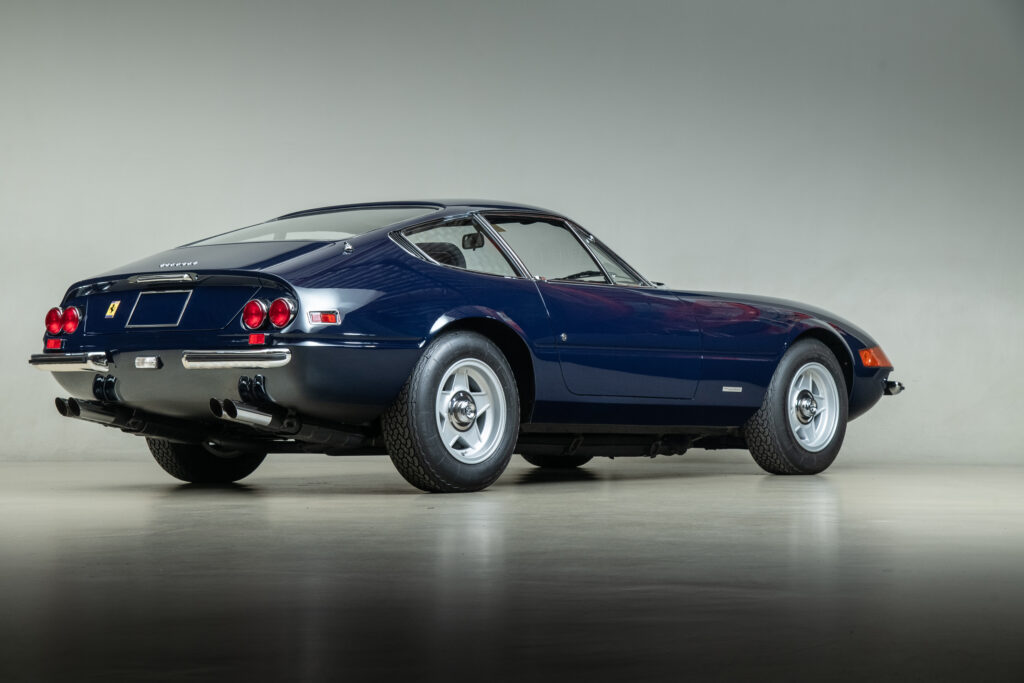
The Ferrari 365 GTB/4, universally known as the “Daytona,” stands as one of the most captivating icons of the Cavallino Rampante’s golden era. Produced between 1968 and 1973, the Daytona is renowned not only for its sleek design and front-mounted V12 engine, but also for the many technical variations introduced throughout its production. One of the components that saw the most changes over time was the exhaust system.

The original exhaust system: multiple variants, inconsistent quality.
During the production of the 365 GTB/4, Ferrari adopted several different exhaust configurations, depending on chassis number, year of manufacture, and most notably, the target market (Europe or the United States)
European models were equipped with a freer-flowing exhaust system, enhancing the naturally aspirated V12’s sound and delivering performance in line with the car’s sporting character. U.S. variants, however, had to comply with EPA regulations, requiring additional silencers, emission systems, and—on later models—even different manifolds.
Despite the prestige of the model, the Daytona’s original exhaust system was not known for its build quality. Made from basic sheet metal and prone to corrosion, it had weaknesses in both durability and acoustic fidelity. To address these issues, Tubi Style developed a dedicated solution.

The Tubi Style Heritage line: stainless steel, authenticity, and performance.
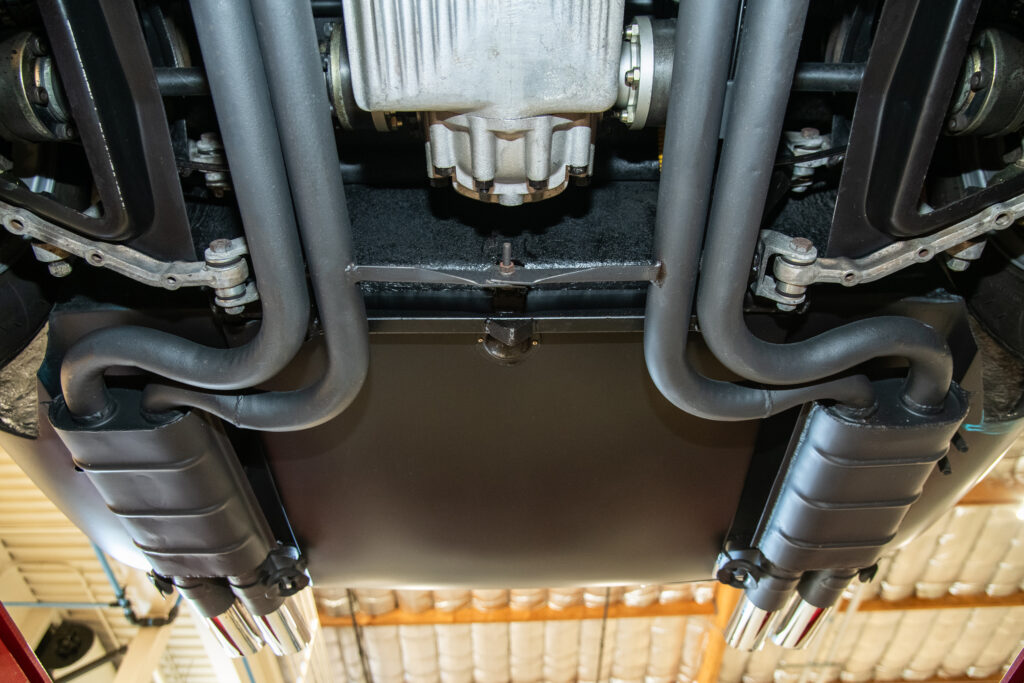
Designed for enthusiasts and collectors who wish to preserve the true character of their Daytona without compromise, the Tubi Style Heritage line offers a complete exhaust system in AISI 304 stainless steel. While visually faithful to the original, it delivers vastly superior materials and performance.
The system is available in two configurations:
- European version: dedicated to chassis numbers below 13,000, this version faithfully reproduces the original setup with short tailpipes and a deep, powerful tone.
- U.S. version: optimized for chassis numbers above 13,000, it reflects the technical changes made for the American market, with adapted silencers and dedicated flex pipes.
Both versions are designed for plug & play installation, requiring no structural modifications, and ensure a full, harmonious sound that brings out the character of the Colombo V12.

Visual differences between EU and US versions.
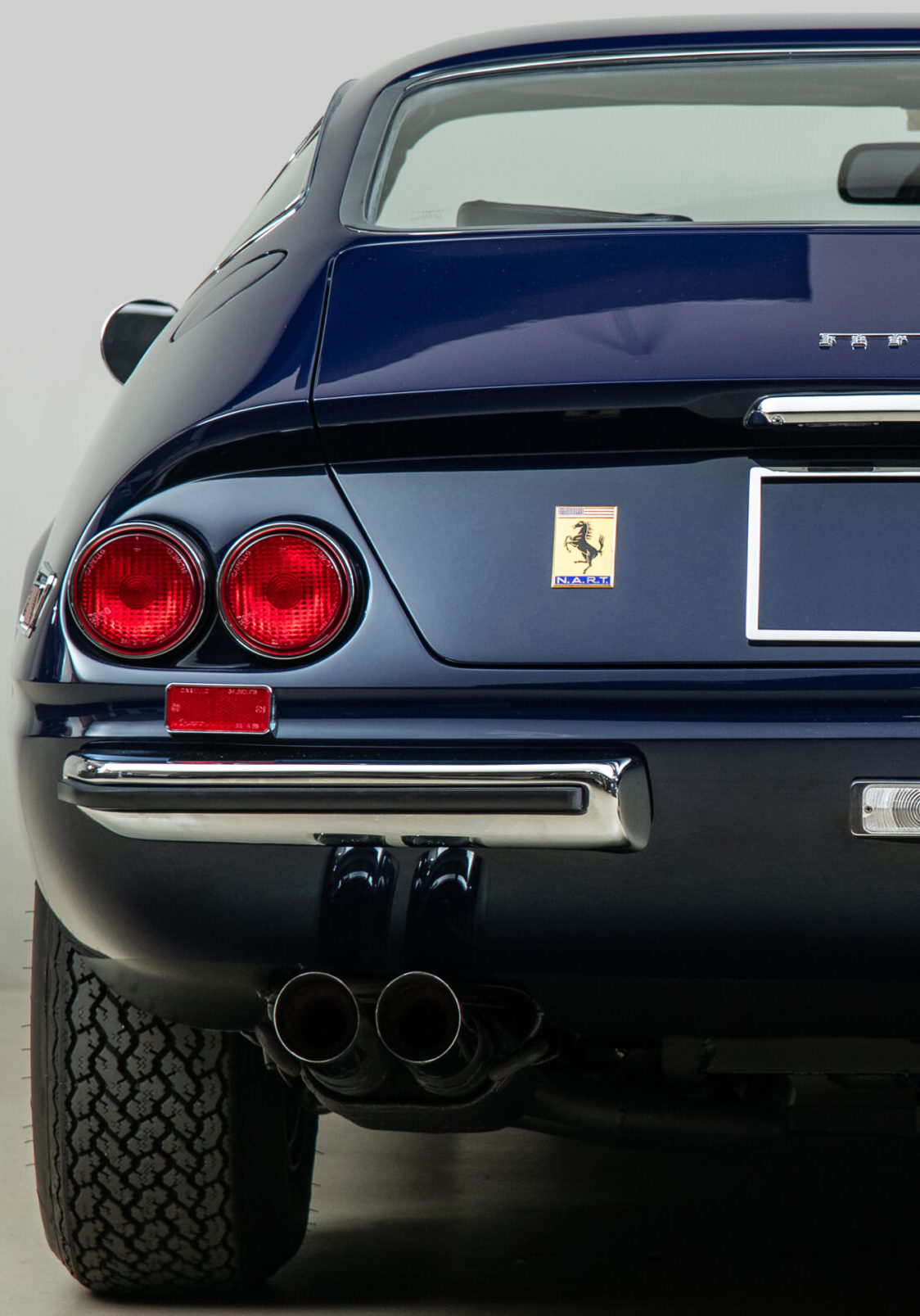
A keen eye will spot the differences between the two setups. European models feature shorter, more symmetrically positioned tailpipes. U.S.-bound Daytonas, by contrast, have longer, more protruding tailpipes along with additional components visible from underneath. These differences affect not only the rear-end appearance but also the sound perception and thermal behavior of the system.
Total production and rarity: key numbers for collectors:
- 1,284 left-hand driveunits for the European market
- 158 right-hand drive units (UK and other markets)
- 617 units destined for the United States, all EPA-compliant and fitted with modified exhausts
In total, 2,359 examples of the Ferrari 365 GTB/4 “Daytona” were produced. Among them, European versions—especially those with chassis numbers below 13,000—are now the most sought-after by collectors for their mechanical authenticity and the purity of their original sound.
Tubi Style’s wish.
We look forward to seeing more and more Ferrari 365 GTB/4 “Daytona” models returning to the spotlight at exclusive events, rallies, and historic tours, where they can be driven with passion and offer genuine emotions to those who see—and hear—them. Thanks to the work of the Tubi Style Heritage division, these masterpieces can now fully express their soul, with a complete exhaust system that gives the legendary V12 its unmistakable Tubi Sound, capable of making enthusiasts’ hearts beat faster—then as now.